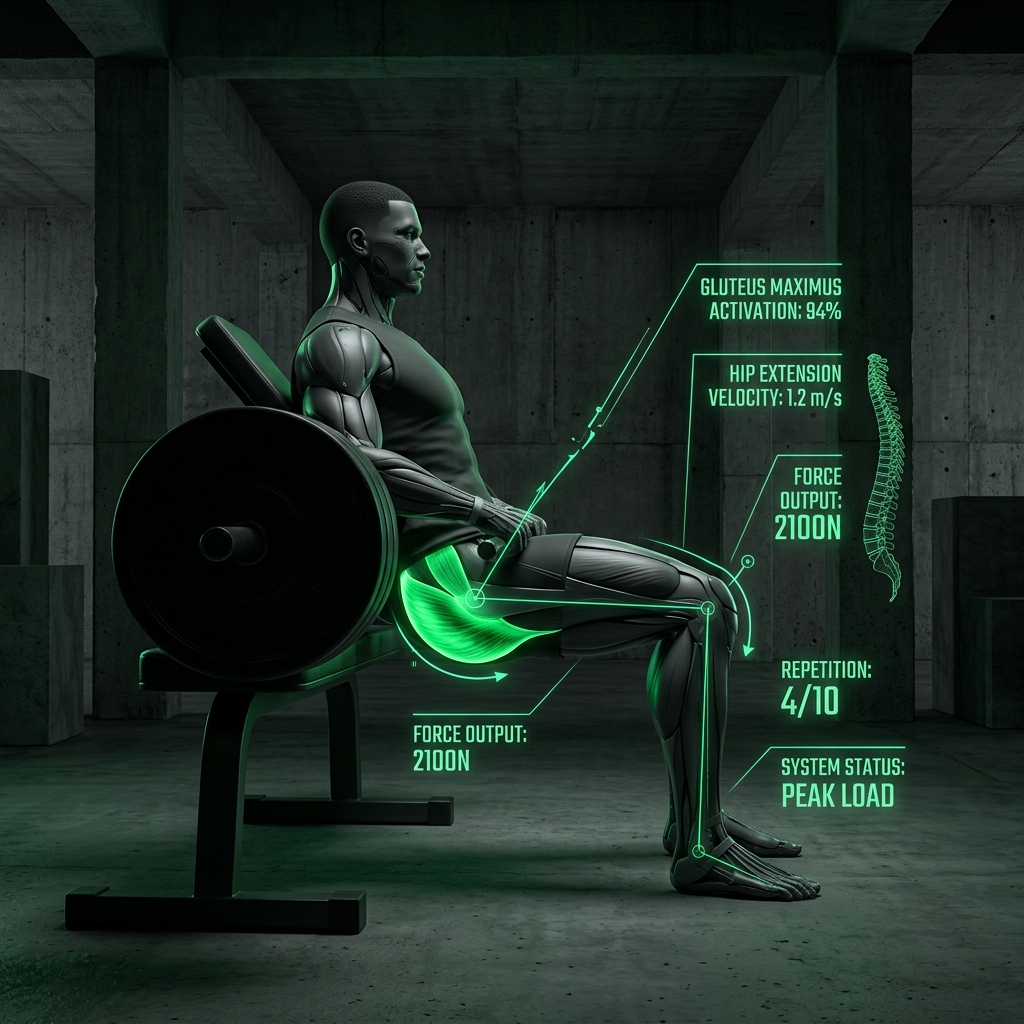
The Glute Amnesia Epidemic: Re-engaging the Posterior Chain
The Glute Amnesia Epidemic: Re-engaging the Posterior Chain
The modern Western lifestyle is characterised by chronic sitting. This postural constant has triggered a neuromuscular phenomenon that is silently devastating joint health and athletic performance. Dr. Stuart McGill originally coined the term "gluteal amnesia" to describe this dysfunction. It is a clinical crisis of reciprocal inhibition. Stop guessing, look at the data.
The Mechanics of Reciprocal Inhibition
To understand glute amnesia, we must look at the law of reciprocal inhibition: when an agonist muscle contracts, the antagonist muscle is neurologically inhibited to allow for movement.
When you sit for eight hours a day, your hip flexors (primarily the psoas major and iliacus) remain in a chronically shortened, hyperactive state. Because the hip flexors are the functional antagonists to the gluteus maximus (the primary hip extensor), this chronic tightness sends a continuous inhibitory signal to the glutes. Over time, the central nervous system essentially "forgets" how to recruit the glute complex effectively.
The Downstream Consequences
The gluteus maximus is the most powerful muscle in the human body, designed to drive hip extension and stabilise the pelvis. When the glutes fail to fire, the body relies on synergistic dominance—recruiting secondary muscles to perform the primary muscle's job.
- Lumbar Spine Overload: Instead of extending the hip with the glutes, individuals will substitute lumbar extension, relying on the erector spinae. This leads to excessive shear force on the lower back and chronic pain.
- Hamstring Dominance: The hamstrings take over as the primary hip extensors, leading to chronic hamstring tightness, strains, and altered pelvic tilt.
- Knee Pathology: Without the stabilising force of the gluteus medius and maximus, the femur is allowed to internally rotate and adduct, leading to knee valgus and increasing the risk of patellofemoral pain and ACL tears.
Re-wiring the Neuromuscular System
Correcting glute amnesia requires a targeted, data-driven approach focusing on mobilization and isolated activation.
- Inhibit and Lengthen: Downregulate the hyperactive hip flexors through targeted mobility work (e.g., the Couch Stretch) to remove the inhibitory signal.
- Isolate and Activate: Utilise low-threshold, isolated glute exercises (bridges, clam shells, quadruped hip extensions) with a focus on maximum voluntary isometric contraction (MVIC). Electromyography (EMG) studies show that the mind-muscle connection is critical here.
- Integrate: Once activation is restored, integrate glute function into compound movements like squats and deadlifts.
Do not let biomechanical dogma dictate your movement quality. Restore the posterior chain.