The Broken Body Blueprint: Why 'Just Squat Heavier' is Destroying Your Joints
The fitness industry operates on dogma. One of the most pervasive and destructive lies is that to get strong, you must aggressively load the spine with heavy squats and deadlifts, regardless of your biomechanics or age.
If you are 22, full of natural testosterone, and have zero structural damage, that works. But if you are 40, sit at a desk for nine hours a day, and have a history of knee and lower back pain, running a generic powerlifting routine is systemic suicide.
Here is the sports science of how to rebuild a broken body.
The Lie of Systemic Load vs Mechanical Tension
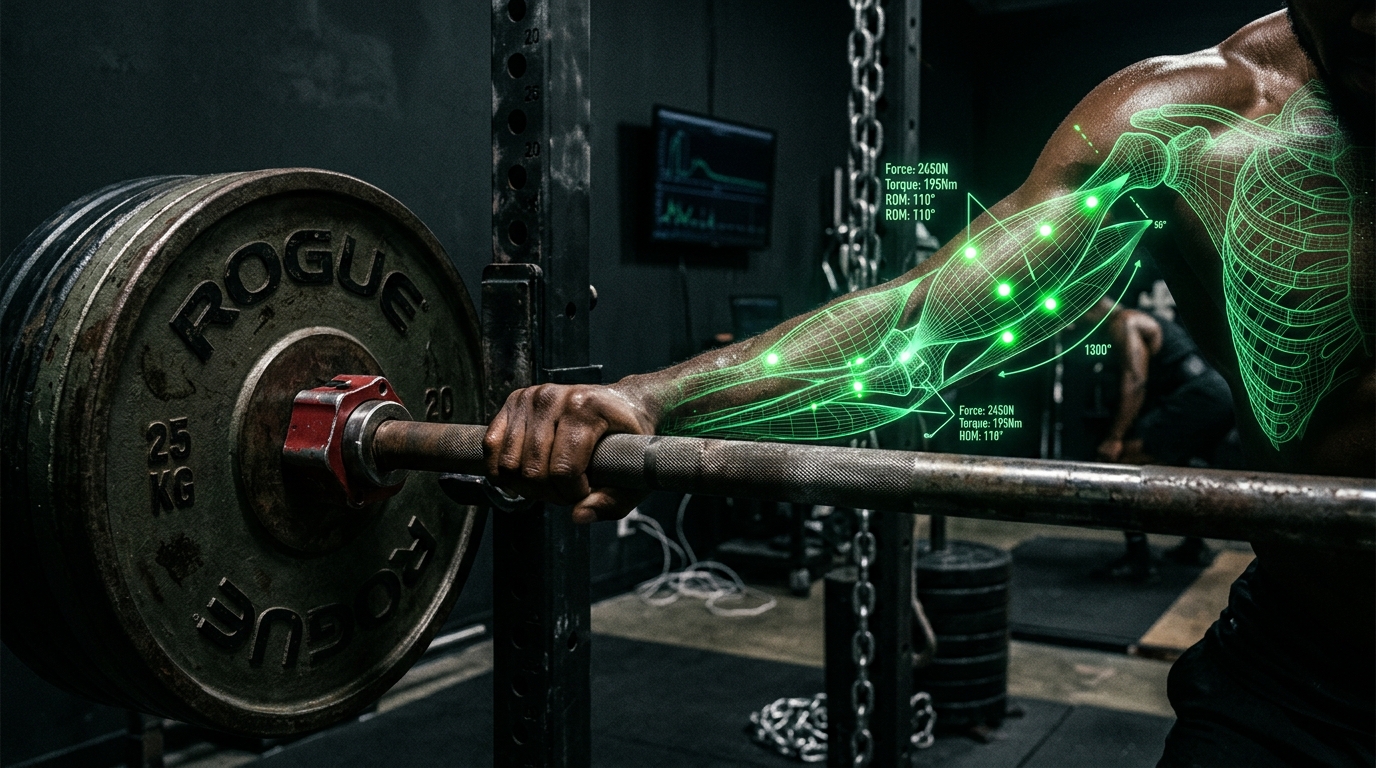
Your muscles do not know how much weight is on the bar. They only understand Mechanical Tension.
- Systemic Load: Stacking 140kg on your back for a squat. This loads your spine, compresses your discs, and taxes your central nervous system (CNS).
- Mechanical Tension: The actual force generated by the muscle fibers contracting against resistance.
You can achieve near-maximal mechanical tension (muscle growth stimulus) with significantly less systemic load by altering the execution of the lift. Using techniques like isometric pauses, strict tempos (e.g., 4 seconds down, 1 second pause, explode up), and pre-exhaustion allows you to fully stimulate the muscle while protecting the joint connective tissue.
You don't need to squat 140kg to grow your legs. You need to take 80kg and make it feel like 140kg through tempo and mechanical disadvantage.
The 1-Rep Max Ego Trap
The obsession with the "1-Rep Max" (1RM) is the fastest way for an older athlete to end up on an operating table.
Powerlifters test their 1RM because it is their sport. If you are training for health, longevity, and aesthetics, testing your 1RM is an ego-driven risk with zero physiological reward.
Clinical data on hypertrophy (muscle growth) proves that lifting a moderate weight for 8 to 15 reps near failure produces the exact same hypertrophic response as lifting a massive weight for 1 to 3 reps. The difference? The heavier weight exponentially increases the shear force on your spine, knees, and connective tissue. Leave the ego at the door. Accumulate volume safely.
Tendon Rehab: The Forgotten Tissue
Muscle tissue is highly vascular; it gets a lot of blood flow and heals quickly. Tendons and ligaments are avascular; they get very little blood flow and heal incredibly slowly.
When you get older and heavier, your muscles can still generate immense force, but your tendons can no longer handle the shear stress. This is why you get patellar tendonitis, tennis elbow, and frozen shoulders.
The clinical solution for tendinopathy is heavy, slow resistance (HSR) and isometric holds. Holding a heavy weight in a static position for 30-45 seconds forces the tendon matrix to realign and stiffen without the damaging shear force of concentric movement.
The Cardiovascular Engine: Intervals and Fartlek
You cannot ignore the cardiovascular system, especially when trying to regulate the metabolic dysfunction we discussed in The Hormonal Trap. But pounding the pavement for 10 miles is disastrous for battered knees.
Instead, we look to how elite athletes train their energy systems using low-impact, high-yield protocols governed by strict Heart Rate (HR) zones:
- Zone 2 (The Aerobic Base): This is 60-70% of your maximum heart rate. You should be able to hold a conversation, but just barely. Sustained output here for 30-45 minutes on a bike or rower builds mitochondrial density and teaches the body to efficiently burn fat for fuel without accumulating systemic fatigue.
- Zone 5 (VO2 Max Intervals): This is 90-100% of your max HR. Short, brutal, structured bursts (e.g., 4 minutes hard, 4 minutes easy). This directly improves cardiovascular output, clears lactic acid, and spikes insulin sensitivity.
- Fartlek (Speed Play): Continuous work where you randomly alternate between Zone 2 and Zone 4/5 based on feel. It trains the body's ability to recover while still moving.
The goal is to build an indestructible engine. Leave the dogma behind. Use data, manage your systemic load, protect your joints, and build the cardiovascular base required to fuel the machine.